
400,000 euros for new funding period: FAU team develops analysis platforms for health data
Extensive health studies contain a great deal of knowledge about genes, lifestyle and diseases. However, several hurdles must often be overcome in order to draw conclusions from the data. This is something a team from Friedrich-Alexander-Universität Erlangen-Nürnberg is hoping to change in collaboration with project partners from Munich and Bozen. A new three-year funding period from the German Research Foundation (DFG) will now enable the researchers to develop their analysis platform DyHealthNet and to streamline research using large health data collections.
Scientific studies with large numbers of participants record a broad range of information that includes everything from genetic characteristics and blood levels to details about nutrition and physical activity. The epidemiological CHRIS study in South Tyrol gathered such data from more than 13,000 participants to find out more about the occurrence and development of common chronic illnesses that are associated with aging.
There are several similar studies. However, when researchers try to explore which connections exist in the collected data beyond the scope of the study, things become complicated. They must specifically request the data they wish to work with, without knowing precisely which data could be useful to them and their new question.
Straightforward access to valuable data
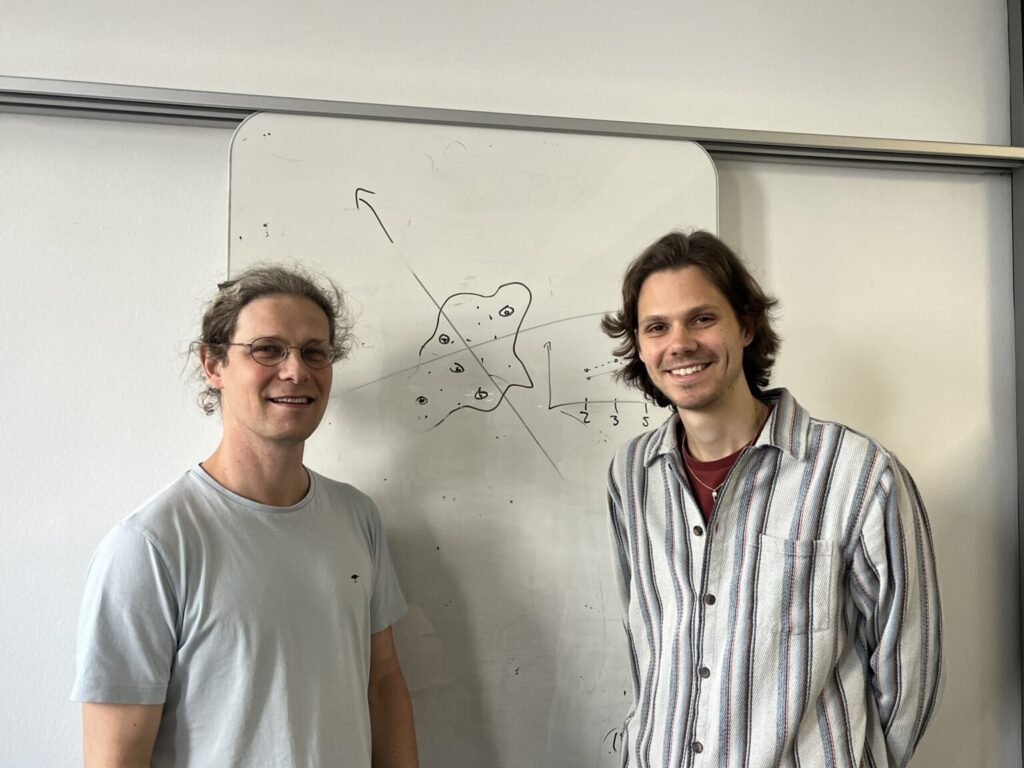
Prof. Dr. David B. Blumenthal, Professorship for Biomedical Network Science, and Fabian Woller, FAU Profile Center Medical Engineering, are already working in the first three-year funding phase of the project with their project partners at Technische Universität München, Freie Universität Bozen and Eurac Research on the DyHealthNet platform. The aim is for the platform to serve as a digital tool that enables researchers to ask new questions of large datasets. The CHRIS study is the platform’s first use case.
“DyHealthNet does not deliver direct medical diagnoses or solutions for particular conditions; instead, it offers tools to help researchers explore pressing questions from new perspectives. Our platform makes it possible to explore the results of studies interactively. Researchers find proteins, genetic variants or characteristics more easily and can link them to biological information,” says Prof. Blumenthal.
Components for a large project
DyHealthNet focuses strongly on genetic data among other factors. The GNExT method for this was developed during the first funding phase. It enables new drug repurposing hypotheses to be generated based on the genetic aspects of certain medical conditions. GNExT has already been published in the journal Nature Genetics.
A further component developed during the first funding period of DyHealthNet is NApy. This tool accelerates statistical evaluations, in particular when large amounts of information are missing in data sets. Such gaps arise, for example, when participants leave the answers to questions blank in a questionnaire. Previous methods were too slow for exploratory analyses during which researchers openly investigate data. NApy enables users of the DyHealthNet platform to receive results for their analyses within just a few minutes. NApy was published in the journal Giga Science last year.
Extended DFG funding for Europe-wide research group.
The goal of the next funding phase is to integrate procedures for investigating genetic risks and to establish the platform itself into the scientific community. “Data protection remains our utmost priority. In the long term, our aim is for DyHealthNet to run on the servers of research institutes so that the sensitive data it contains remain protected,” explains Fabian Woller.
DyHealthNet is a collaboration between FAU, Technische Universität München, the Institute for Biomedicine – Eurac Research and Freie Universität Bozen. The DFG is providing a total one million euros for the new funding period of which around 400,000 euros is being awarded to FAU.
Further information about the vision of “DyHealthNet”: https://www.dyhealthnet.ai/
Contact
Prof. Dr. David Benjamin Blumenthal
Professorship for Biomedical Network Science
david.b.blumenthal@fau.de
Fabian Woller
FAU Profile Center Medical Engineering (FAU MT)
fabian.woller@fau.de